has reserved space in late January at a venue in San Francisco in advance of a planned product announcement. this report is based on information gleaned for a Financial Times story that ran on Wednesday.
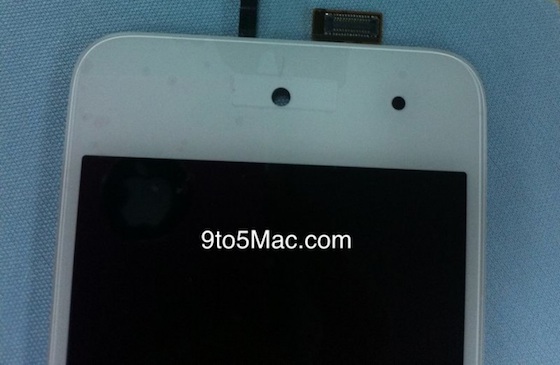
Apple’s iPod Touch may still be in line for a camera, according to renewed rumours online. We heard rumours of Apple working on a camera-toting iPod Touch in September but now the whispers are back…
According to an “inside source”, who spoke to the LA Gadgets Examiner, Apple did plan to launch an iPod Touch with a camera in September. However, quality control issues allegedly nixed its arrival.
iPod Touch teardown shots have already shown that the device has space for a camera in amongst its digital guts so this speculation sounds convincing. But, of course, it’s easy to claim an “inside source” as Apple never comments on speculation.
Advertisement - article continues below »
The rumours suggest that the next generation of the iPod Touch will include the same camera as the iPod Nano. We’re not so sure about that. Will Apple restrict the iPod Touch to video recording as it has done with the iPod Nano?
As per the weekend reports, the latest operating system Windows 7 has fared better in market share than Apple’s Mac OS X. Net Applications has reported that Windows 7 has passed the 5% market share, which is more than the total market share of all versions of Apple's Mac OS X.
The internet metrics firm has also reported that, the Windows 7 has achieved the distinction of getting a constant 5% and 5.14% throughout the last week between Nov 15-21. The statistics also showed that its 5.07% for two-day average was also higher than the Mac OS X during that period.
"It's safe to say that Windows 7's daily share did peak above Mac's weekly share," said Vince Vizzaccaro, executive vice president at Net Applications.
According to Vizzaccaro, his company has not yet compiled daily averages for Mac OS X, but they are confident that Windows 7 will fare well for a long stretch.
"Certainly, the trend line shows Windows 7 will surpass Mac share soon," he predicted.
Statistics also shows that, Windows has done better than the previous share of 92.54% in October. Earlier, it had gained 0.28% in March 2008, the largest gain till now.
"We may be seeing an uptick in overall Windows share this month," Vizzaccaro confirmed.
"This isn't too rare, but if we see three or four months in a row of Windows regaining market share, that would be a significant trend change," he added.
It has been noticed that Windows 7’s market share is growing steadily since Oct 22 and soon it has also climbed up to 2.7% in OS sales. Its fourth week sale in October stood at 3.7%. So at the current pace of selling the new OS would cross 4% in market share gains.
I am now giving away Google Wave invite, to get more details follow me Twitter and you will be ellidged to get your invite.
NOTE: I will only have between 5-7 invites per day so be fast
ALSO I Have Lockerz invites I am able to dish out, if you want an invte, please follow me on Twitter so you can get your update
NOTE: I will only give out a max of 7-9 invites per day so be fast
Remember to follow me on twitter

It's probably the most important and debated piece of software on the modern computer. See how your fellow readers get around the net, and vote for your favorite web browser, in this week's Hive Five.
Windows only (for practical purposes, but soon on Mac and Linux, if we're lucky): Some browsers have roots going back to the early 1990s—Chrome, on the other hand, is the new kid on the block. Although Chrome has a distant relationship to Konqueror and is a cousin to the Safari web browser—both share the speedy WebKit rendering engine—Google's browser is less than a year old. Despite its youth, it's already garnered praise for its minimalist interface and snappy page rendering. Chrome also handles site errors and quirks well, and each individual tab is a unique process, so a crash or lag in one shouldn't pull down or crash the others. In general, though, Chrome has caught attention for running a performance-focused JavaScript engine in a lightweight GUI. Also worth noting, Chrome has been holding its own in the recent Pwn2Own security challenge, with the distinction of being the only browser left standing after the first day of security exploits and attacks. For a closer look at Chrome, check out our screenshot tour.
Windows/Mac/Linux: Opera is a rock-solid browser with roots stretching back to 1994. Many of the features baked right into Opera are either not implemented in other browsers, or require multiple extensions at the cost of system resources—navigation by mouse gestures is one of the flashier examples. Despite being feature-packed, Opera has a fairly small market share, due largely in part to being trialware up until 2000 and advertisement-supported until 2005—many people were turned off by the expense, if not the ads. Still, Opera proponents have long claimed that Opera beats Internet Explorer and Firefox when it comes to speedy rendering. Another selling point for Opera is the quality of the built-in tools. For many users, the built-in RSS reader, email client, and BitTorrent client do their jobs admirably, cutting down on the number applications they need running at once. Opera is extensible, but the pool of available extensions is radically smaller than that available for Firefox. More screenshots and details on Opera's features are available here.
Windows/Mac/Linux: Firefox is the grandchild of the venerable Mosaic browser and free-roaming son of Netscape. Although Firefox has a myriad of user-friendly, forward-thinking features, a decently secure framework, and an open-source ideology, its most prominent is extensibility. When convincing a Firefox user to abandon Firefox for anything else, even temporarily, you won't have to fight them over giving up the AwesomeBar or about:config tweaks—you'll hear a common, understandable refrain: "What about my extensions?" The repository of extensions maintained by Mozilla currently has over 6,000 entries, covering everything from blocking advertisements, to managing your clipboard, to allowing you to further customize your browsing experience with scripts a la Greasemonkey (here's 10 of our must-have picks). Combine the passion people have for extensions and the ability tosync those extensions across multiple computers and portable installations, and you've got a force to be contended with. For a closer look at Firefox, make sure to check out our power user's guide to Firefox 3 and the top 10 Firefox 3 features.
Windows only: Internet Explorer still commands a healthy chunk of the browser market, mostly because it ships with the most popular operating system on Earth and fits, if not exactly elegantly, into corporate computer plans. While many or most IE users stick with it for lack of wanting to try something else, Lifehacker readers definitely don't fall into that crowd—the majority of readers who voted in favor of Internet Explorer are sporting Internet Explorer 8. By contrast, nearly 20 percent of those surfing the web right now are using Internet Explorer 6, which had its initial release in 2001. Version 8 could mark a resurgence for the brand, though. It's the first version of Internet Explorer to have a strong focus on web standards compliance, as well as increasing rendering speed. And like Chrome, Internet Explorer 8 maintains a separate process for each tab to increase stability and security. Internet Explorer 8 has also beefed up its security measures from previous versions, including active filtering against malicious cross-site scripting and ActiveX isolation from the core of the browser. For more information about what's new in Internet Explorer 8 check out our screenshot tour and overview.
Windows/Mac: Safari is Apple's contribution to the web browsing world, built originally to fit snugly inside OS X. Like Chrome, Safari runs the speedy WebKit rendering engine for snappy page loads. In addition to its WebKit core, Safari also has the Nitro JavaScript engine, which lays claim to radically faster JavaScript execution than Internet Explorer and Firefox (in its own testing reports, anyways). Safari sports Apple's Cover Flow browser for perusing your history and bookmarks and an eye-catching display of the top 24 sites you've visited as the default page when Safari is loaded. For more features, check out ourscreenshot tour.
• IW has control of the game
• IWnet servers will host multiplayer
• DLC will be a charged item for PC
• No dedicated servers <– WTF?
• Matchmaking system used to play with similarly ranked players
• VAC instead of PB
• Semi-capable password servers
• Semi-capable ad-hoc servers
• Competitive play is dead <– good job IW, idiots.
• MW2 mods would not be possible
• Full integration into Steam
Apple has just announced that it will now support in-app purchasing for free applications on the App Store. This is absolutely huge news for developers, and will likely lead to a fundamental shift in the way applications are marketed and priced. It’s hard to overstate just how much this will change the App Store.
Up until now developers of premium applications have faced a major problem: they had no way to offer a feature-restricted version of an application for free that users could pay to unlock if they liked what they saw — a model that’s quite common on desktop software. This led to the creation of the so-called ‘Lite’ versions of applications, which generally offer a reduced featureset, but require users to download an entirely new application to access more features, which obviously isn’t ideal. Now, they won’t face this hurdle. They’ll be able to ditch the Lite version entirely, switch their currently premium app over to free (which will lead to more impulse downloads), and give users the chance to upgrade their featureset down the road.

1.1 You may use the In App Purchase API only to enable end users to purchase content, functionality, or services that You make available for use within Your Application (e.g. digital books, additional game levels, access to a turn-by-turn map service). You may not use the In App Purchase API to offer goods or services to be used outside of Your Application.
On Currency: 2.1 You may not use the In App Purchase API to enable an end user to set up a pre-paid account to be used for subsequent purchases of content, functionality, or services, or otherwise create balances or credits that end users can redeem or use to make purchases at a later time.
Note: This means that content owners won’t be able to let their content expire. This probably won’t be welcome news to many of them.2.3 Content and services may be offered through the In App Purchase API on a subscription basis (e.g., subscriptions to a magazine, comic series, or financial reporting service); however, rentals of content, services or functionality through the In App Purchase API are not allowed (e.g., use of a particular game item or digital book for a pre-determined, limited period of time).
If You Would Like a Lockerz invite, please contact me via email
frolicols01@hotmail.com
with the subject of
"Lockerzs Invite"
which includes your email address
OR
leave a comment below leaving your email address
Pretty much every morning and every night I download the newest build of Chromium for Mac (the open source builds that will eventually turn into Chrome for Mac). While we made an auto-updater to do it for you, you can also manually find the latest builds here. This morning, I visited this site and noticed something new: A Chrome OS folder.
Sadly, this is Linux-only for the time-being, but that makes some sense since Chrome OS is Linux-based. And lest you think it’s just the Chromium for Linux build, there are already other folders dedicated to that (including a 64-bit variety), and the Chrome OS builds weigh in at 139 megabytes versus around 19 megabytes for Chromium.
Last month, we poked around some of the open source Chromium directories and were able to find some interesting information about Chrome OS. This included limited information about a status bar and a navigation bar, both of which will likely be key parts of Chrome OS. A scan today of various directories brings up even more interesting information.

We get the strangest e-mails in the MobileCrunch tips line. Sometimes people will write in to tell us about their
day, using us as an archaic, vacuum-esque livejournal. Other times (and quite often), internet newbies fail to realize this isn’t a store, and ask us when we’ll have such and such item in stock. Less often, we’ll get random little gems of self-created goodness that I’m never quite sure what to do with; they’re not news, per se, but they’re still rather interesting.
Such is the case with this concept video (after the jump) from Swedish design house Ocean Observations. It looks rather flashy and neat, but I’m left wondering: would anyone use it?
It’s like OS X’s Expose feature, tweaked for iPhone app screens. Tap the home button, and up to 9 pages of homescreen are shown in a grid. Tapping any of the displayed pages will jump you directly to that page, allowing you to skip from page 1 to page 8 without swiping 7 times. If Apple provided this as one of the home button behavior alternatives, would you use this? It seems to me like the primary use would be launching a specific app; if that’s the case, why not just use search – which can already be tied to the home button?
Article By MobileCrunch
If You Want to Join Lockerz, You can. leave a comment including your email address
The version of Windows that succeeds Windows 7 will include a 128-bit architecture, according to an embarrassing leak from Microsoft's research and development team in the US.
Microsoft employee Robert Morgan appeared to detail the software giant's plans for Windows 8, and even Windows 9, on business networking site LinkedIn, where he listed his job as 'senior research and development'. His profile has now been removed from the main LinkedIn site, but is still viewable in Google's search cache.In it, he says he's "working in high security department for research and development involving strategic planning for medium and longterm projects."
He goes on to say his R&D projects include: "128-bit architecture compatibility with the Windows 8 kernel and Windows 9 project plan." He's also responsible for "forming relationships with major partners: Intel, AMD, HP and IBM."
Windows 7, due to become available worldwide on October 22, is available in both 32-bit and 64-bit versions. (See "Windows 7 Performance Tests.")
Indeed, we've had the option of 64-bit versions of Windows since Windows XP Professional x64 Edition was launched May 2005. But while XP's successor, Vista, is also available in both 32-bit and 64-bit versions, the latter has failed to take off in a big way.
64-bit computers, which can address more RAM and are theoretically more powerful than 32-bit equivalents, are likely to become more popular with Windows 7. A 128-bit version of Windows 8 would represent the next leap in performance.
According to Microsoft's plans to release a new desktop version of Windows every three years, Windows 8 is scheduled to become available in 2012.
Tap Tap Revenge 3 Link is HERE


Tapulous’s latest update to its massively successful Tap Tap Revenge franchise will soon be live on the App Store. It looks as though the app was supposed to be live by now according to an article on TUAW, though it doesn’t appear to be available quite yet (we’ll update with a link as soon as it is). The new app brings with it plenty of gameplay enhancements, but the biggest change here is support for in-app song purchases. This means you’ll be able to choose from a roster of premium songs created by well known artists and buy the ones you like — giving users more choice than ever, and giving Tapulous a lucrative new source of revenue.

Gamers would have loved to be able to purchase songs in-game before now, but for the first year of the App Store’s existence Apple didn’t allow for that functionality at all, so Tapulous was forced to release standalone premium packs (as they did with Weezer, Nine Inch Nails, and others). These apps have done well, but Tapulous was always faced with the challenge of getting users to download an entirely new application with each release. Update: CEO Bart Decrem says that the company has sold over 500,000 premium apps at $5 each, so obviously they weren’t exactly struggling. Now they’re be able to sell track packs through a single application.
Up until now TTR’s flagship games have been free, which helped them get great distribution (the original Tap Tap Revenge was the most downloaded game of 2008), but has turned into something of a thorn in Tapulous’s side. With the release of the iPhone 3.0 software update this summer Apple finally allowed applications to offer in-app purchases, but they offered this option only for premium apps — that’s why TTR3 costs 99 cents. Tapulous will have to find a way to get its users on other apps to switch over to TTR3, but it should be able to facilitate the switch by cross-promoting in TTR1, 2 and the aforementioned premium apps.
The TUAW article includes a full listing of songs that will able available through the app, which are available as 6-track bundles for $2.99 and 2-song bundles for 99 cents.
Here’s a sampling of the tracks available:
BLINK 182 – “Adam’s Song” / “All the Small Things” / “Dammit” / “First Date” / “The Rock Show” / “What’s My Age Again”
FALL OUT BOY – “Thanks for the Memories” / “Sugar, We’re Goin Down” / “Dance, Dance” / “This Ain’t a Scene, It’s an Arms Race” / “I Don’t Care” / “American Suitehearts”
FOO FIGHTERS – “The Pretender” / “Wheel” / “My Hero” / “Best of You” / “Monkey Wrench” / “All My Life”
THE KILLERS – “Mr. Brightside” / “Sweet Talk” / “Human” / “When We Were Young” / “All These Things That I’ve Done” / “Read My Mind”
We’ve been tracking the new version for some time now (the company had planned to have it out by the end of August but it was delayed). Among the features in the new version are over 100 free songs, custom themes and avatars, integrated chat, and a multiplayer online gaming arena.

2009
Site By Joe Knaggs. Copyright ©2009